Body Kit Bumper Painting vs Textured Finish – What’s the Real Difference?
Body Kit Bumper Painting vs Textured Finish – What’s the Real Difference?
If you’ve ever ordered an aftermarket body kit bumper, you probably noticed something right away — most of them don’t come painted. That’s completely normal in the aftermarket industry, but it often raises questions:
Should you paint it? Or leave it textured?
Let’s break it down in a simple, real-world way based on how body shops and aftermarket manufacturers actually handle these parts.
1. Why Most Aftermarket Bumpers Are Not Painted
Unlike OEM parts, most aftermarket bumpers are shipped in raw material color (usually black, gray, or off-white plastic). They are not primered or painted for a reason:
- Different cars have different paint fade and wear levels
- Shipping painted parts risks scratches and damage
- Paint matching requires professional adjustment
This process ensures resistance against sun, heat, stone chips, bugs, and daily wear.
2. Painted Finish – Clean, Premium Look
A fully painted bumper is what most people imagine — glossy, color-matched, and seamless with the car body.
Pros:
- Luxury, OEM-like appearance
- Color matched to the vehicle
- Can be repaired and repainted if scratched
- High visual impact, especially on full builds
Cons:
- More expensive (labor + materials)
- Shows fingerprints, dust, and swirl marks easily
- Paint can chip or peel over time if not done properly
Most professional body shops will tell you — good paintwork is not cheap, but it makes the biggest visual difference.
3. Textured Finish – Practical and Durable
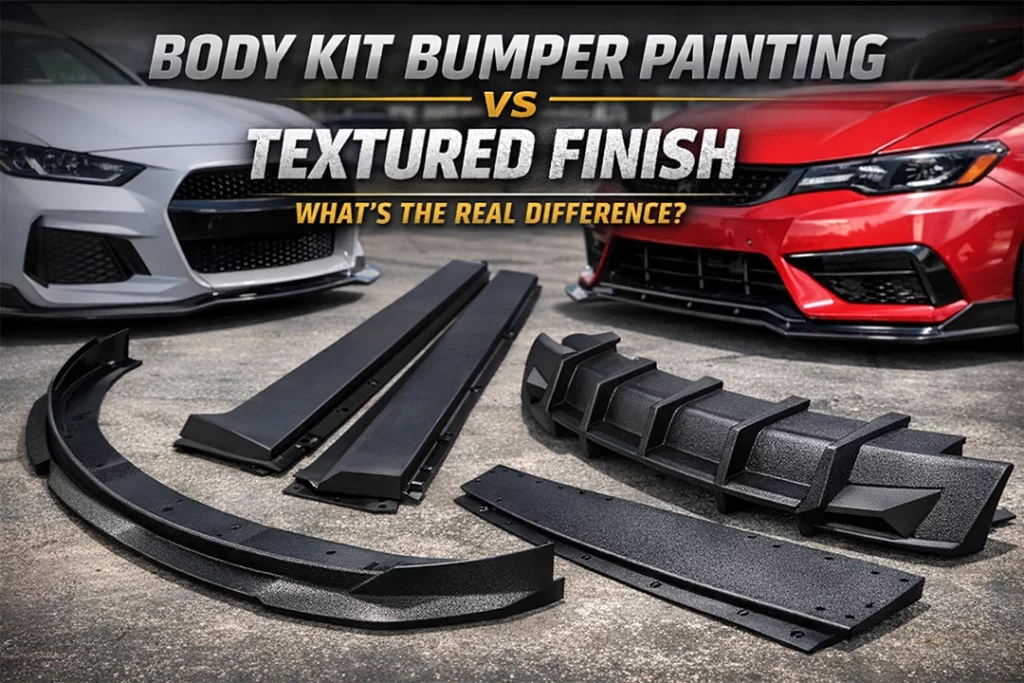
Some aftermarket parts like front lips, rear lips, and side skirts come pre-textured from the factory. This is a matte black surface with a slight grain.
You’ll see this a lot on daily-driven builds and OEM-style upgrades.
Pros:
- Anti-scratch and highly durable
- No paint = no peeling or cracking
- Hides dust, fingerprints, and small marks
- Low-profile matte look
- Usually more affordable
- Nice hand-feel, slightly grippy surface
Cons:
- If damaged, cannot be repainted — must be replaced
- Less “premium” or glossy appearance
- Limited customization (mostly black)
4. Real-World Example (Body Shop Perspective)
In most body shops, customers with full bumper conversions (like sport or luxury style upgrades) almost always go with painting for a seamless look.
But for add-on parts like lips and skirts, many choose textured finish because:
- They sit lower and get scratched more often
- Maintenance is easier
- Replacement cost is lower if damaged
This is why you often see a mix: painted bumper + textured lips.
5. Painted vs Textured – Quick Comparison
- Durability: Textured wins
- Appearance: Painted wins
- Maintenance: Textured easier
- Repairability: Painted wins
- Cost: Textured cheaper
6. Final Thoughts
There’s no “better” option — it depends on your build style and usage.
Painted finish = premium, customizable, high-end appearance.
If you’re building a show car or want that factory luxury feel, go painted.
If it’s a daily driver or performance setup, textured parts might save you time, money, and headaches.
Many experienced builders actually combine both — getting the best of both worlds.