
7 Mistakes to Avoid When Buying a Body Kit
7 Mistakes to Avoid When Buying a Body Kit
A body kit is one of the fastest ways to transform how your car looks — swap in an LS-style front end on your Lexus ES, add a sportier grille, or go all-in with a full wide-body package. But the difference between a build you’re proud of and one you regret almost always comes down to what you knew before you hit “order.”
Too many buyers shop on price alone and end up dealing with poor fitment, surprise costs, or parts that just don’t hold up. Here are seven mistakes worth avoiding — so your money goes toward a kit you’ll actually love.
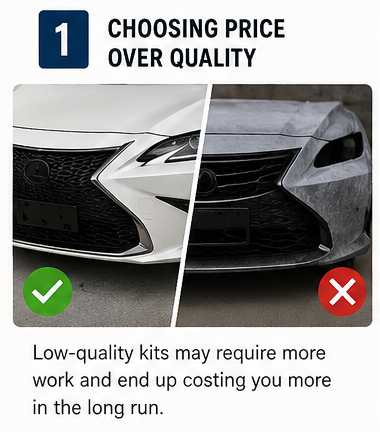
1. Choosing Price Over Quality
A great deal is great — until it isn’t. Body kits with loose manufacturing tolerances often need extra sanding, reshaping, and fussing before they’ll sit right, and uneven gaps or misaligned panels tend to show up right when you’re closest to done.
Before you buy on price alone, weigh it against:
- Material quality
- Manufacturing process
- Fitment accuracy
- Supplier reputation
- Customer reviews and real installation photos
A well-made kit often saves you money — in labor hours and body shop visits you never have to pay for.
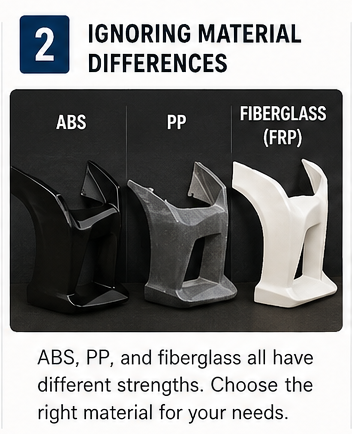
2. Overlooking the Material
Not every body kit is built from the same stuff, and the material shapes how it performs.
ABS Plastic — lightweight, durable, and known for consistent fitment; resists cracking, which makes it a solid daily-driver choice.
Polypropylene (PP) — flexible and impact-resistant; the same material many factory bumpers are made from, so it holds up well to everyday street driving.
Fiberglass (FRP) — light and budget-friendly, and a favorite for custom builds — though it’s more prone to cracking on impact than ABS or PP.
Match the material to how you’ll actually use the car, and you’ll be much happier with the result.
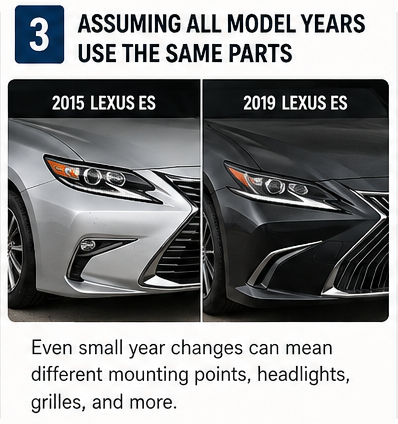
3. Assuming Every Model Year Is the Same
Two cars can look nearly identical and still need completely different parts. Manufacturers regularly shift things like:
- Mounting points
- Headlight shapes
- Grille dimensions
- Radar sensor placement
- Parking sensor layouts
before buying, confirm the exact model year, trim level, engine variant, and factory options. A few minutes double-checking specs now can save you a returned box and a lot of frustration later.
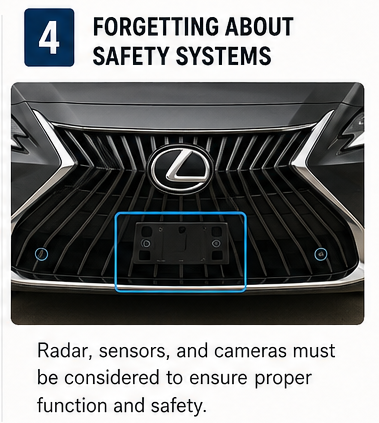
4. Forgetting About Modern Safety Systems
Today’s vehicles pack in tech that simply didn’t exist ten years ago — adaptive cruise control, front radar, parking sensors, 360° cameras, lane assist. All of it can be affected by an aftermarket bumper or kit if sensor locations aren’t accounted for.
Confirm compatibility with your car’s safety systems before you order. A stunning new bumper isn’t much of a win if it triggers a dashboard full of warning lights or knocks out a feature you rely on.
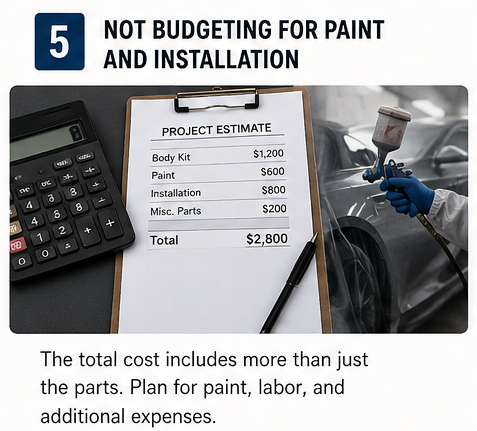
5. Underestimating Paint and Installation Costs
The sticker price on a body kit is rarely the whole story. Depending on your vehicle and location, you’ll also want to budget for:
- Professional painting
- Surface prep
- Installation labor
- Alignment adjustments
- Shipping
In some cases, paint and labor can cost more than the kit itself — so get quotes from a local body shop before you order, not after.
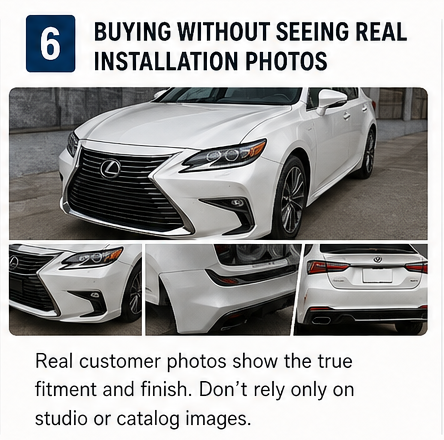
6. Skipping Real Installation Photos
Product photography looks great — but it doesn’t always tell the whole story. Before you buy, ask the supplier for:
- Customer installation photos
- Close-up fitment shots
- Finished vehicle pictures
- Installation videos
Real-world photos are the fastest way to sanity-check quality and set accurate expectations. If a supplier can’t (or won’t) produce them, treat that as a yellow flag.
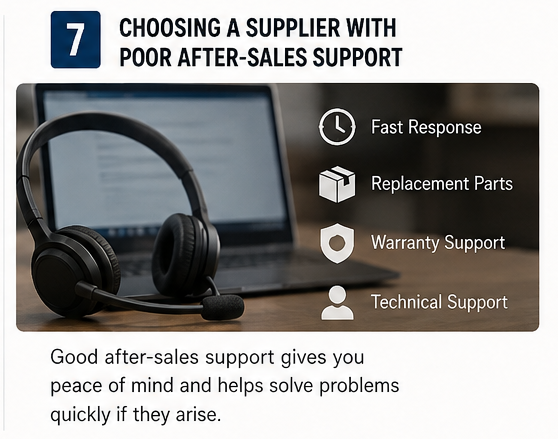
7. Choosing a Supplier With Weak After-Sales Support
Even great parts occasionally arrive with shipping damage, missing hardware, or a fitment question you didn’t expect. Before you buy, find out:
- How responsive the supplier is
- Whether replacement parts are readily available
- What the warranty actually covers
- Whether technical support is easy to reach
The right supplier stands behind what they sell — before the purchase and long after it.
Final Thoughts
A body kit can completely change how your vehicle looks and feels — but only when you’ve done the homework first. Verify fitment, understand your material options, budget realistically for paint and install, and choose a supplier who’ll be there if something goes sideways.
A little research today is what makes sure your car looks exactly the way you pictured it — the first time.